
.svg)
New Analysis Highlights the Real World Economic Benefits of Improved Roadway Safety
Washington – Today, the Autonomous Vehicle Industry Association (AVIA), released the Robotaxi Report, a first-of-its-kind look at the U.S. robotaxi ecosystem and the substantial benefits autonomous vehicles will deliver to communities nationwide.
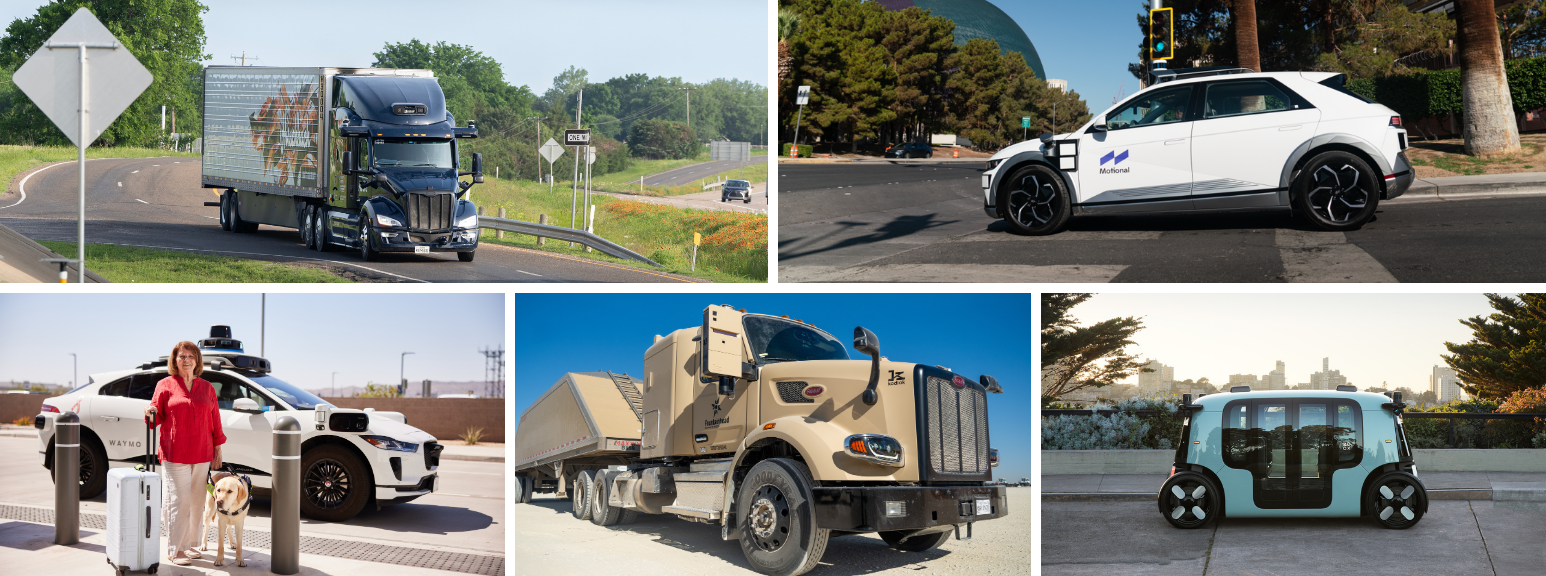
The report profiles leading American robotaxi companies—including Avride, Motional, Nuro, Volkswagen ADMT, Waymo, and Zoox—and details their technical approaches and deployment strategies across cities like Atlanta, Austin, Las Vegas, Los Angeles, Phoenix, and San Francisco.
The report highlights independent validation of robotaxi safety performance through rigorous economic analysis. AVIA partnered with global consulting firm AECOM to quantify the economic value of these safety improvements. In San Francisco alone, Waymo's 29.88 million miles of rider-only operations from March 2022 through June 2025 generated an estimated $71 million in safety-related economic savings for residents—costs avoided from medical bills, vehicle repairs, insurance claims, and lost productivity.
“Americans are increasingly experiencing robotaxis in cities across the country, and they are seeing firsthand how this transformative technology will forever change the way we travel,” said Jeff Farrah, AVIA CEO. “AVIA’s Robotaxi Report quantifies what those deployments mean for communities: fewer crashes, lower transportation costs, and new mobility options for people with disabilities. The benefits are real, measureable, and growing.”
Addressing America's Mobility Challenges
The Robotaxi Report documents how autonomous vehicles address critical transportation barriers:
Policy Framework for American Leadership
The report emphasizes that U.S. leadership in autonomous vehicle deployment requires supportive federal and state policy frameworks. AVIA's recommendations, detailed in its policy document Securing American Leadership in Autonomous Vehicles, include establishing behavioral competency standards, modernizing outdated vehicle safety regulations, and creating pathways for commercial deployment.
"The United States must lead globally on robotaxi deployment," Farrah said. "American companies are facing intense competition from strategic competitors determined to set the pace for this century. What happens next depends on policymakers establishing regulatory frameworks that support American innovators."
The complete Robotaxi Report is available at www.theavindustry.org.


Keep up to date with the latest news from the Autonomous Vehicle Industry Association (AVIA).