
.svg)
By Jeff Farrah, Chief Executive Officer of the Autonomous Vehicle Industry Association
Not long ago, the idea of hailing a ride in a vehicle with no human driver seemed like something out of a science fiction novel. Today, it’s a routine part of daily life for hundreds of thousands Americans across the country.
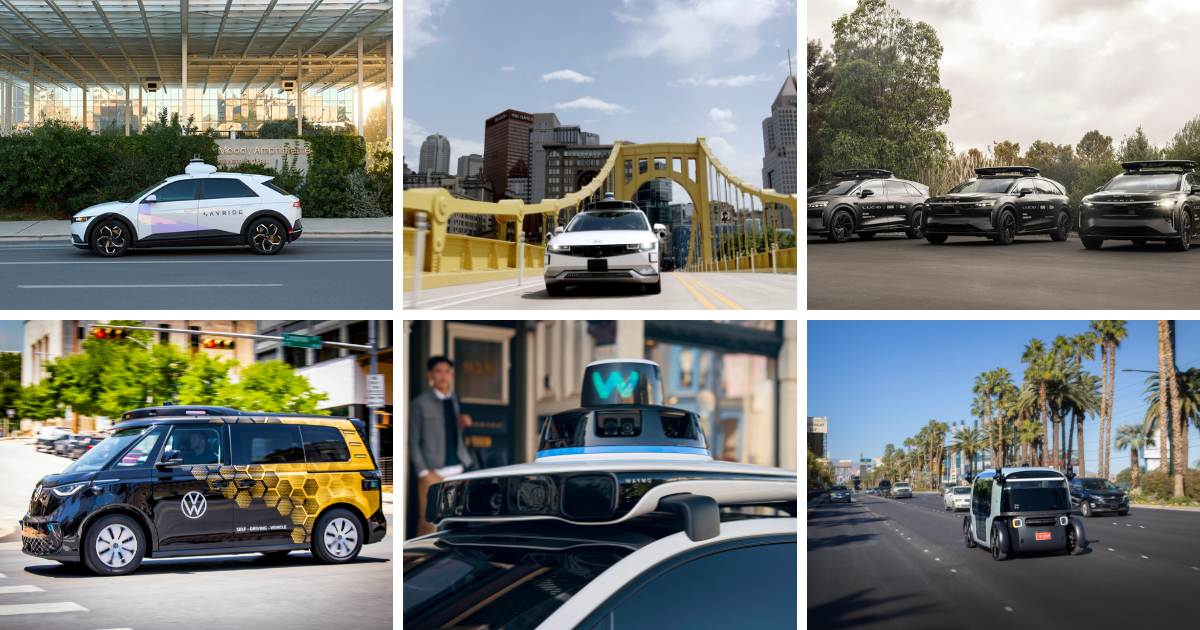
Robotaxis—on demand autonomous vehicles—are operating commercially in states like California, Texas, Arizona, Georgia, and Nevada, with deployments scheduled in more states in the coming months. These are not experimental prototypes confined to test tracks; they’re transporting people to work, taking families to dinner, and getting students to class. The technology has moved from concept to reality, and the real-world results are worth examining closely.
That is why AVIA has released our most comprehensive analysis of the U.S. robotaxi ecosystem, examining millions of autonomous miles, safety data, and the policy landscape. The results speak for themselves: robotaxis are setting the stage for safer roads, greater accessibility, and economic growth.
Economic Benefit of Safer Roads
When AVIA released the 2025 State of AV in May, the entire autonomous vehicle industry reported logging more than 145 autonomous million miles on public roads, more than doubling our 2024 findings. That number has increased exponentially since the release of that report, especially as robotaxi companies continue deploying in new cities.
As part of our analysis, we looked into the safety performance data available for robotaxi operations, finding lower crash rates than human driven vehicles. This is not surprising when you consider that human error—impaired, drowsy, and distracted driving—account for the vast majority of traffic fatalities. Remove the human variable and the roads get safer for everyone—passengers, pedestrians, cyclists, and other drivers.
The economic impact of reduced motor vehicle crashes is significant. AVIA partnered with AECOM, a global consulting firm specializing in transportation innovation and economic development, to analyze publicly available data from Waymo, an AVIA member. The findings estimate $71 million in safety-related economic savings for residents in San Francisco from March 2022 through June 2025—costs avoided through fewer medical bills, vehicle repairs, insurance claims, and lost productivity. When people aren't sitting in emergency rooms or dealing with collision aftermath, that time and money gets redirected into their lives and local economies.
Improved Accessibility for Millions
Another meaningful impact of robotaxis is one that's harder to quantify in dollar terms: transportation independence for people who cannot drive traditional vehicles.
Twenty-five million Americans have vision loss or visual impairment. For them, personal vehicle ownership isn't an option, and they've had to rely on family members, public transit systems that may not serve their needs, or expensive specialized transportation services. Robotaxis change that equation fundamentally.
According to the National Disability Institute, autonomous vehicles could create 4.4 million jobs for people with disabilities. That's not just about employment numbers—it's about economic participation, dignity, and the ability to live independently. When someone can reliably get to work, medical appointments, social activities, and daily errands without depending on others' schedules, their entire life opens up.
The Future of AVs in America
While robotaxis operate successfully in several states, the lack of a federal policy framework creates uncertainty that threatens American leadership in this technology.
Twenty-six states have now passed legislation authorizing Level 4 and Level 5 autonomous vehicles on their roads. That's encouraging because it shows state leaders across the political spectrum recognize the potential of this technology. But only the federal government can establish uniform standards for vehicle design, construction, and performance. Without federal action, we're building on an incomplete foundation.
China isn't waiting. Their government has made autonomous vehicles a national priority, with aggressive deployment timelines and plans to export the technology globally. Chinese AV companies are already operating in European markets. Meanwhile, American innovators, those who pioneered this technology, face regulatory uncertainty at home.
The debate about whether autonomous vehicles can work is over. They're working right now. The question is whether America will embrace the technology we invented, or whether we'll watch from the sidelines as other nations take the lead.
The data is clear. The safety performance is strong. The benefits are real and measurable. The economic opportunity is substantial. And the accessibility impact is transformative for millions of Americans who've never had transportation independence.
Robotaxis represent one of the most consequential transportation innovations of this century. The technology is ready. The public is adopting it. What we need now is policy that matches our technological capability—federal standards that support continued American leadership while maintaining rigorous safety oversight.
Read AVIA's Robotaxi Report here.


Keep up to date with the latest news from the Autonomous Vehicle Industry Association (AVIA).