
.svg)
.jpg)
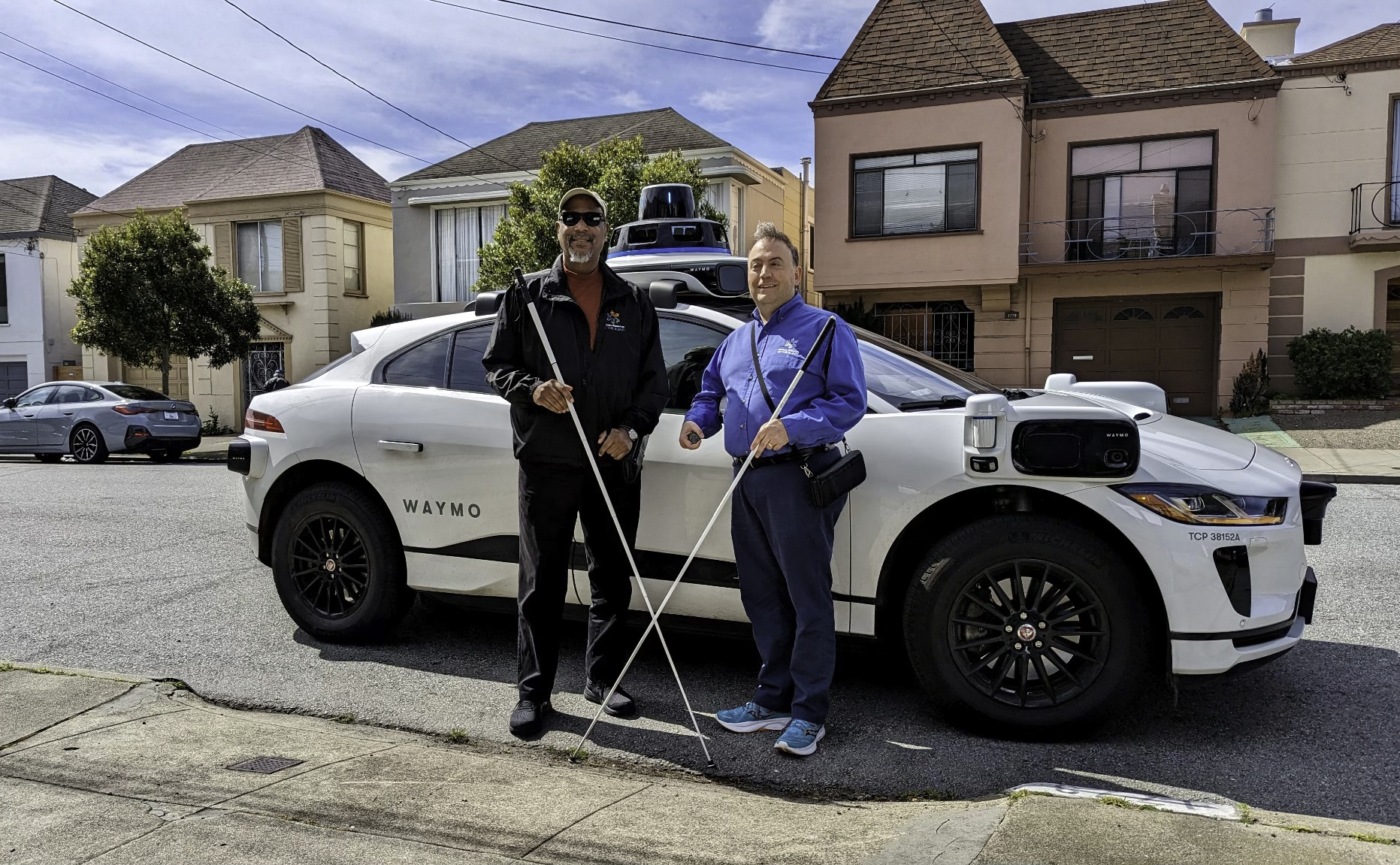
AVIA partners with diverse organizations who share our vision on the future of autonomous vehicles and the impact the technology will have on their communities. AVIA sat down with National Federation of the Blind President Mark Riccobono to talk about autonomous transportation opportunities for blind Americans.
What excites you most about the future of autonomous vehicles?
As President of the National Federation of the Blind, our nation’s transformative membership and advocacy organization of blind people, I am excited about the promise of autonomous vehicles because they represent a profound expansion of independence for blind Americans.
For generations, driving has been a symbol of freedom and adulthood. When I was a teenager and my friends began earning their driver’s licenses, I had accepted the idea that my freedom and independence would simply be more limited, leaving me feeling like a second-class citizen. When I met blind people, I learned that we could imagine a different future. Autonomous vehicles and our involvement in this industry have changed my perspective. For the first time, blind people will have the ability to summon a private ride without depending on another human driver. Access to reliable transportation on our terms, without inconvenience to us or others, with systems that are completely nonvisually accessible is equality of the type we strive to enjoy on a daily basis.
Equally important, autonomous vehicles eliminate many of the barriers blind people face with traditional ride services. Too often, blind passengers using a white cane or traveling with a service animal are denied rides. With autonomous vehicles, I can call for a ride with the assurance that my request will be honored, that I will not be judged or excluded because of my blindness, and that I can travel privately with the same dignity and control as anyone else behind the wheel.
This technology excites me because it is not only about moving from one place to another. It is about equal participation, personal choice, and the confidence that comes with knowing that blind people can share in the freedom of fully independent travel.
How do you see AV technology improving safety, mobility, or economic opportunity in your community or sector?
Access to reliable, affordable, and timely transportation is one of the greatest barriers faced by blind people, and it is a significant factor in why our community remains drastically underemployed. If you cannot consistently get to work on time, you cannot sustain employment. Autonomous vehicle technology has the power to change that reality.
Level 4 autonomous vehicles remove dependence on a human driver. Unlike people, automated systems do not bring human bias or error into the equation. Once scaled to meet demand, these vehicles can provide blind individuals with the same reliable, on-demand transportation that others take for granted.
The driverless nature of these vehicles also creates new possibilities. Instead of navigating the social dynamics of a human driver, blind professionals can use travel time productively—whether that means preparing for a meeting, making business calls, or joining a virtual conference. In this way, autonomous vehicles not only expand mobility, but also unlock new economic opportunities and empower blind people to participate more fully in the workforce and community life. One example is that when calling a traditional taxi or rideshare vehicle, I may get a driver who is insistent about asking me about my disability as though I am a museum exhibit. While I value the opportunity to educate the public about the truth about blindness, sometimes I have other things on my mind, and I am not in public education mode. In other words, the cost of taking a ride with an unknown driver is often well beyond the price charged.
What do you wish more people understood about autonomous vehicles and their potential?
What I want people to recognize is that autonomous vehicles offer the same freedom and convenience as driving yourself—without requiring you to be behind the wheel. Instead of being consumed with the task of driving, you can use that time in meaningful ways: preparing for work, catching up with family, or simply enjoying the ride.
For blind people, this technology is transformative. We know the limitations of depending on others for transportation, and we also know the dignity and opportunity that come with being able to travel independently. This is not about blind people—everyone stands to gain. Autonomous vehicles will make travel more efficient, and more productive for all of us.
This is the true potential of autonomous vehicles: expanding independence and opportunity in ways that will lift the entire community.
To learn more about the National Federation of the Blind and the work they are doing on behalf of blind Americans, visit www.nfb.org.


Keep up to date with the latest news from the Autonomous Vehicle Industry Association (AVIA).